Generative AI has fundamentally changed the rules of social engineering. Attacks are more convincing, more scalable, and increasingly capable of bypassing the controls financial institutions have relied on for years. For CISOs leading cyber defense at banks, insurers, and fintechs, a siloed email security strategy is no longer sufficient. The question is no longer whether your organization will be targeted, it is whether your teams are prepared to recognize and respond when it happens.
The Threat Is Evolving. Your Awareness Strategy Must Too.
AI-powered phishing, deepfake voice and video impersonation, and precision-crafted pretexting attacks are no longer theoretical. 45% of financial services firms faced AI-powered attacks last year. The most resilient organizations are actively closing the preparedness gap, and the difference lies in how seriously they treat the human layer as a critical attack surface.
Threat vectors are evolving at full speed. Attackers are not changing the fundamental equation, they are finding more powerful ways to exploit familiar human behaviors. As banks, insurers, and fintechs face unprecedented levels of targeting, CISOs must anticipate what is coming and equip their teams with the right tools before the next attack lands.
How blockchain lending company Figure was hit by a socially engineered data breach →
Where to Start: A Practical Framework for Financial Services CISOs
Knowing the threat exists is not enough. The real challenge is translating that awareness into a structured, actionable defense strategy, one that fits the specific regulatory, operational, and cultural realities of financial services organizations. That means asking the right questions about your current posture, identifying the gaps in your awareness program, and putting the right simulations, playbooks, and training in place before attackers find those gaps first.
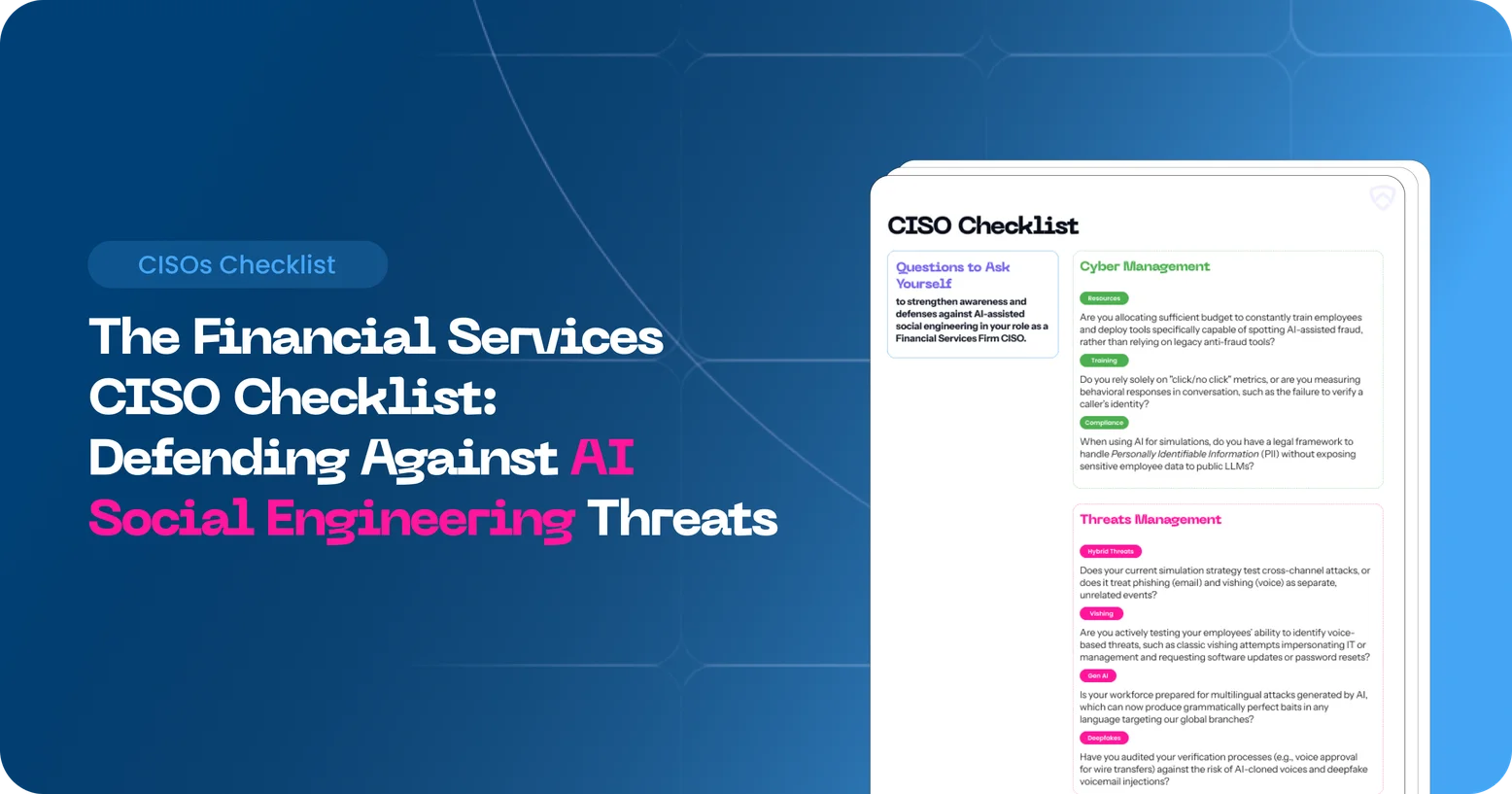
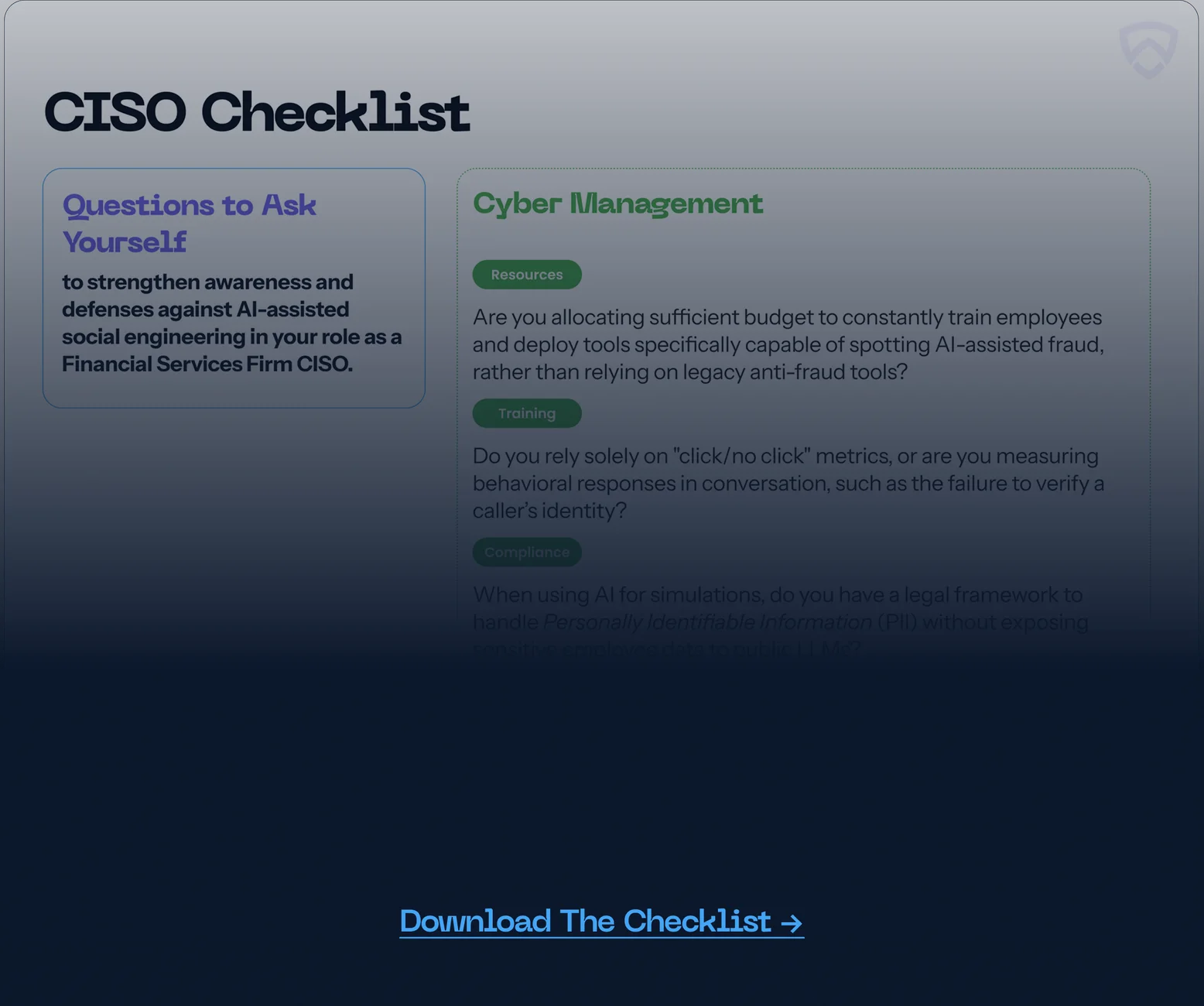
To help you do exactly that, we have put together a dedicated checklist built for financial services CISOs and cyber teams, covering the key self-assessment questions you should be asking right now, and the concrete steps to build a stronger, more resilient awareness strategy against AI-assisted social engineering. Download the checklist and start strengthening your defenses today.
What Arsen's 2026 Social Engineering Risk Report Reveals
The broader threat picture is laid out in detail in Arsen's 2026 Social Engineering Risk Report for Financial Services, essential reading for any CISO responsible for protecting a bank, insurer, or fintech in today's environment. The report covers why social engineering remains the top financial threat vector, how generative AI is reshaping phishing and impersonation at scale, real-world examples of AI-driven attacks, and how both defenses and regulatory frameworks must evolve to keep pace.
The organizations closing the preparedness gap are not waiting. Neither should you.