Voice phishing (vishing) has become one of the fastest-growing and hardest-to-detect threats facing financial institutions. While email phishing defenses have matured, voice-based social engineering now exploits human trust, authority, and urgency—often bypassing even the most robust technical controls. For security professionals in banking, insurance, fintech, and capital markets, the challenge is clear:
How do you train financial services teams against realistic vishing attacks—at scale, compliantly, and with measurable impact?
This article explains why vishing disproportionately affects financial institutions, where traditional defenses fall short, and how modern vishing training and simulation closes the gap.
Why Financial Services Teams Are Prime Targets for Vishing
Financial institutions are uniquely attractive to voice-based attackers for several reasons:
- Direct financial impact: wire transfers, payment approvals, account changes
- High-pressure workflows: time-sensitive transactions and incident response
- Hierarchical authority models: executives and senior managers can override controls
- Complex compliance environments: attackers exploit policy ambiguity
Many financial organizations already operate at a higher security maturity level than other industries. Among our customers, financial services teams are often the most trained and most regulated—yet still successfully targeted.
Why? Because human-operated and AI-assisted vishing scales faster than defenses.
Red teams may conduct manual vishing exercises, but these are:
- Time-consuming
- Limited to a small number of employees per year
- Constrained by human voice recognition risks
The result: vishing threats increase, while training coverage stagnates.
Voice Phishing Threat Models in the Finance Industry
According to public threat intelligence, vishing attacks have increased by over 400% year over year, with financial services consistently among the most targeted sectors (notably reported by CrowdStrike).
Common financial-sector vishing scenarios include:
- Urgent wire transfer or payment authorization requests
- Executive or board member impersonation
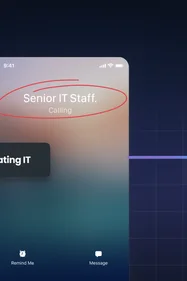
- IT support pretexts leading to malware or remote access tools
- Compliance or audit-related intimidation tactics
These attacks often succeed without exploiting a single technical vulnerability—only human psychology.
📑 Download the 2026 Social Engineering Risk Report for Financial Services →
Common Countermeasures (and Their Limits)
Financial institutions have implemented strong controls—but vishing exploits the cracks between them.
Multi-step approvals
ERP and payment systems often require multiple authorizations for wire transfers. While effective, attackers:
- Target individuals who can bypass workflows
- Exploit emergency or authority-based exceptions
Second-factor authentication (2FA)
Some organizations require token exchanges during sensitive internal calls. However:
- The process is manual
- Emotional manipulation often occurs before verification
- Attackers may reverse the protocol, requesting the token themselves to appear authoritative
Manual vishing simulations
Red teams occasionally conduct live vishing tests, but scalability is limited:
- Small sample sizes
- High operational cost
- Infrequent coverage
Awareness training
LMS-based content and security briefings help—but passive learning doesn’t build reflexes.
Where Vishing Training Makes a Real Difference
Modern vishing training for financial services teams relies on realistic, repeatable, and compliant simulations.
With advances in Voice AI, platforms like Arsen can now:
- Conduct large-scale, realistic vishing simulations
- Train entire organizations—not just VIPs
- Measure behavior, not just knowledge
Why experiential vishing training works
Just like phishing, voice attacks must be experienced to develop instinctive defenses:
- Recognizing emotional manipulation
- Challenging authority politely but firmly
- Following verification protocols under pressure
How to Choose a Vishing Training Platform for Financial Services
When evaluating vishing training solutions, financial institutions should prioritize:
1. Scenario fidelity
Pre-recorded messages don’t reflect real-world attacks. Modern attackers talk, adapt, interrupt, and escalate. High-fidelity Voice AI enables natural, interactive conversations at scale.
2. Compliance and legality
Telephone simulations intersect with privacy, labor, and telecom regulations. A trusted platform must be designed for lawful, auditable training operations in regulated environments.
3. Scenario variety
Training against a single pretext creates blind spots. Effective programs rotate:
- Voices and accents
- Attack narratives
- Technical objectives
4. Automation and ease of use
Security teams are resource-constrained. Software-defined vishing allows:
- Adaptive campaigns
- Regular testing cycles
- Minimal operational overhead
Anticipating new attack vectors
Advanced simulations now include:
- Voice cloning scenarios
- Environmental sound design (airport, office, emergency settings)
- Executive impersonation under time pressure
Practical Vishing Training Use Cases in Financial Institutions
Validating MFA Enforcement
High-investment attackers prioritize bypassing security controls by intercepting session tokens in real-time. One financial organization addressed this by testing 10% of its workforce quarterly to verify token exchange procedures under pressure. At scale, these simulations revealed critical gaps where internal policies broke down, identified which high-access roles were most vulnerable to social engineering, and determined whether AI-generated vishing successfully led to unauthorized system access.
Defending Against IT Support Scams
Another institution faced sophisticated threats from attackers impersonating internal IT departments to push "critical patches" that were actually malware. By utilizing high-fidelity simulations that reproduced the entire attack chain—including the deployment of remote access tools—teams were able to train in a realistic environment. This approach allowed the organization to accurately measure resilience and significantly improve their detection and response times against modern, high-ROI infrastructure.
Learn More About Cybersecurity Awareness for Financial Services →
Strengthen Your Defenses with Vishing Training for Financial Services Teams
Vishing is no longer a niche threat—it’s a core risk vector for financial institutions. Without realistic, scalable training, even mature security programs remain exposed.
If you want to:
- Train your teams against real-world voice attacks
- Measure behavior under pressure
- Stay ahead of evolving social engineering tactics
- Request a demo of Arsen today.
📑 Download the 2026 Social Engineering Risk Report for Financial Services →
👉 Book a demo to see how large-scale vishing training works in practice