Financial services cybersecurity now spans far more than the network. CISOs at banks, insurers and fintechs need tools for fraud, identity verification, data, email, voice channels and the people attackers manipulate. This list covers 10 platforms, one per layer of that stack, with what each does and who it suits.
Key takeaways
- A financial services security stack now includes fraud, AML and identity verification tools, not only endpoint, network and email security.
- AI-driven impersonation (voice cloning, deepfake video, synthetic identities) crosses every layer, from onboarding to the contact center to the finance team.
- Several newer, AI-native vendors (Sumsub, Unit21, BioCatch, Cyera, Reality Defender) address risks that legacy security suites were not built for.
- Detection tools flag suspicious media, transactions or sessions. They do not test whether an employee verifies a request before acting, which is where human risk tools fit.
- No single platform covers the whole list. Choose by the exposure you need to reduce first.
What should a financial services CISO's tool stack cover?
A financial services cybersecurity stack has to protect systems, data, customers and money movement at once. In practice that means seven layers: human risk, customer identity, fraud and AML, voice and deepfake channels, email, data, and endpoint or network detection. Each tool below is chosen for one of those layers.
The pressure is concrete. IBM's 2025 Cost of a Data Breach Report puts the average US breach at $10.22 million, an all-time high, and found phishing was the most common initial access vector, at 16% of breaches (600 organizations studied, March 2024 to February 2025) (CyberScoop, July 2025). Financial services ranks among the five costliest industries in the same report.
How did we select these 10 tools?
We picked one or two widely used platforms per layer, favoring tools built specifically for financial institutions or for AI-era threats. Every capability listed comes from the vendor's own public pages or reputable press, as of October 2026. We did not test the products, we do not rank them against each other, and no vendor published pricing on the pages we reviewed.
Quick shortlist
- Sumsub: identity verification, KYC and KYB, with liveness and deepfake detection.
- Unit21: fraud and AML monitoring with AI agents for investigations.
- BioCatch: behavioral and device intelligence to detect scams in digital banking sessions.
- Pindrop: voice authentication and deepfake detection for contact centers.
- Reality Defender: deepfake detection across files, calls and meetings.
- Abnormal AI: behavioral AI email security against BEC and vendor fraud.
- Cyera: AI-native data security posture management (DSPM) and DLP.
- CrowdStrike Falcon: endpoint, identity and cloud protection on one agent.
- Darktrace: self-learning AI for anomaly detection across email, cloud and network.
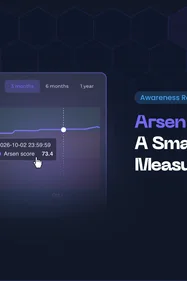
- Arsen: social engineering and human risk management, with vishing and deepfake simulations.
1. Sumsub: best for KYC, KYB and onboarding fraud
Sumsub is an identity verification and compliance platform covering users, businesses and transactions. It is aimed at regulated sectors including banks, payments, lending, trading and crypto, and states it serves more than 4,000 clients (Sumsub).
- Best for: fintechs and digital banks that onboard customers remotely and need KYC, KYB and AML checks in one flow.
- Key features: ID, document, biometric and non-document verification; liveness and deepfake detection; business verification; watchlist and PEP screening; transaction monitoring; Travel Rule support; case management and risk scoring.
- Fraud coverage: new account fraud, identity fraud, account takeover, payment fraud and money muling prevention.
- Limits: customer results on the site (ROI, fraud reduction) are vendor-reported or commissioned studies, not independent tests.
2. Unit21: best for fraud and AML operations teams
Unit21 is a risk platform that combines real-time fraud monitoring with AML transaction monitoring and case management, with AI agents that assist detection and investigation (Unit21).
- Best for: fintechs, sponsor banks and credit unions that want fraud and AML alerts in one workflow.
- Key features: real-time monitoring across RTP, FedNow, ACH, cards and crypto; device intelligence; a shared fraud consortium; sanctions and PEP screening; customer risk rating; alert-to-case-to-SAR workflows with pre-populated regulatory filings.
- AI angle: agents analyze alerts, summarize risk, draft case narratives and surface linked entities.
- Limits: the payment rails listed are US-centric. Check coverage for SEPA and other non-US schemes.
3. BioCatch: best for detecting scams inside digital banking sessions
BioCatch uses behavioral and device intelligence to tell a customer's normal behavior apart from signs of fraud or manipulation. Its Scams360 tool, launched in July 2025, targets authorized push payment (APP) scams by tracking signals such as typing speed, hesitation and phone calls made during an online banking session (Finovate, July 2025).
- Best for: retail and commercial banks facing impersonation and APP scams, where the real customer logs in and approves the payment.
- Key features: behavioral and device signals (up to 3,000 data points per session, per the vendor), real-time scam and account takeover detection in digital channels.
- Scale: the company reports more than 250 financial institution customers, including 34 of the world's largest banks.
- Limits: BioCatch protects customer sessions. It does not cover employees, who are the target of CEO fraud and help desk vishing.
4. Pindrop: best for voice authentication and contact center deepfakes
Pindrop secures phone and voice interactions. Its Pulse product provides passive voice authentication and real-time fraud detection from the IVR to live agents, analyzing audio, device, behavioral and network signals (Pindrop and Zoom, March 2026).
- Best for: banks and insurers with high-volume contact centers exposed to account takeover by phone.
- Key features: voice authentication, synthetic voice and deepfake detection, fraud risk scoring inside the agent workflow, and an integration with Zoom Contact Center announced in March 2026.
- Scale: Pindrop states that 7 of the top 10 US banks are customers.
- Limits: Pindrop protects the bank's own phone channel. A cloned voice calling an employee's mobile phone sits outside it.
5. Reality Defender: best for deepfake detection across files, calls and meetings
Reality Defender detects AI-generated or manipulated audio, video and images, the synthetic media that sets deepfake attacks apart from vishing and phishing, with separate products for each entry point (Reality Defender).
- Best for: security and fraud teams that need one detection layer for investigations, KYC media, live calls and executive meetings.
- Key features: RealScan (browser-based file analysis), RealAPI (analysis from your own applications, including identity verification and KYC flows), RealCall (cloned voices and AI callers on live calls), RealMeeting (alerts to hosts during meetings).
- Recognition: the vendor states it was named a Market Shaper in Gartner's June 2026 deepfake detection research for startup vendors.
- Limits: no accuracy rates are published on the platform page.
Learn more about Reality Defender →
6. Abnormal AI: best for business email compromise and vendor fraud
Abnormal AI is an email security platform that uses behavioral AI to detect business email compromise (BEC), vendor invoice fraud, executive impersonation and account takeover (Abnormal AI).
- Best for: finance and payment teams that receive supplier invoices and change-of-bank-details requests by email.
- Key features: inbound email security, account takeover protection and email DLP rules, deployed with low operational effort according to the vendor.
- Limits: the financial services page gives no measured outcomes. Ask for references from institutions of your size.
Learn more about Abnormal AI →
7. Cyera: best for finding and protecting sensitive financial data
Cyera is an AI-native data security platform combining data security posture management (DSPM), data loss prevention (DLP), data detection and response and access governance. It discovers and classifies sensitive data across IaaS, PaaS, SaaS and on-premise environments, without agents (Cyera, financial services).
- Best for: institutions that need to know where customer and payment data lives before regulators, auditors or attackers find it.
- Key features: discovery and classification, continuous monitoring of misconfigurations, stale data and excessive access, compliance reporting mapped to frameworks including DORA and GDPR.
- Scale: Cyera raised a $400 million Series F at a $9 billion valuation in January 2026 and reported working with 20% of the Fortune 500 over the previous year (Yahoo Finance, January 2026).
- Limits: DSPM shows where data is exposed. It does not stop an employee from being talked into sending it.
8. CrowdStrike Falcon: best for endpoint, identity and cloud protection
CrowdStrike Falcon is a cloud-delivered platform that runs endpoint protection, detection and response, threat hunting, identity protection and cloud security from a single agent (CrowdStrike, financial services).
- Best for: large institutions consolidating endpoint, identity and cloud tools, or lean teams that want managed detection.
- Key features: Falcon Insight EDR, Falcon Identity Protection against credential misuse and lateral movement, Falcon Cloud Security (CNAPP), Falcon OverWatch threat hunting and Falcon Complete managed detection and response.
- Compliance: the financial services page references PCI DSS, NIST SP 800-53 and FFIEC.
- Limits: the page cites older framework versions (PCI DSS v3.2, NIST Rev 4). Confirm current mappings with the vendor.
Learn more about CrowdStrike Falcon →
9. Darktrace: best for anomaly detection across email, cloud and network
Darktrace uses self-learning AI that models how an organization normally operates and flags deviations, rather than relying only on known attack signatures. For financial services, it positions its ActiveAI Security Platform across email, SaaS, cloud and networks, with autonomous investigation (Darktrace).
- Best for: security operations teams that want to catch novel or insider activity that rules miss.
- Key features: real-time anomaly detection, AI-driven triage and investigation, autonomous response options.
- Limits: behavioral baselines take time to learn and tune. Plan for an initial period of alert review.
10. Arsen: best for testing and training the people social engineers target
Arsen is a social engineering simulation and human risk management platform. It tests how employees react to phishing, vishing powered by voice cloning and deepfake impersonation, then trains those who need it. For financial services, scenarios can be built for treasury, branch, wealth and payment operations (Arsen, financial services).
- Best for: banks, asset managers and fintechs where a single employee can release a payment, reset access or approve an exception.
- Key features: phishing simulations with AI-generated scenarios modeled on real threats; vishing simulations using real-time voice AI and voice cloning; deepfake video call simulations in Microsoft Teams, sold as an add-on; scenarios covering account takeover, CEO fraud, instant payment scams and SWIFT manipulation attempts.
- Training and reporting: just-in-time training for employees who fail a simulation, micro-learning released through the year, dark web monitoring of compromised employee credentials, and reports on training coverage, phishing KPIs and remediation across entities, branches and subsidiaries.
- Limits: Arsen does not block attacks or detect synthetic media in real time. It measures and improves the human decision, which complements the detection tools above.
- Example: a treasury analyst receives a Teams invitation from the "CFO", joins a call with a deepfake likeness asking for an urgent transfer, and is coached right after the scenario.
Learn more about vishing training for financial services teams →
How do these 10 tools compare?
| Tool | Layer | Main threats covered | AI-era impersonation coverage | Typical owner |
|---|---|---|---|---|
| Sumsub | Customer identity | Identity fraud, synthetic identities, money muling | Liveness and deepfake detection at onboarding | Compliance, onboarding |
| Unit21 | Fraud and AML | Payment fraud, money laundering | Not the focus | Fraud, AML operations |
| BioCatch | Digital banking sessions | APP scams, account takeover | Detects signs a customer is being coached | Fraud, digital banking |
| Pindrop | Voice channel | Phone account takeover | Synthetic voice detection in contact centers | Contact center, fraud |
| Reality Defender | Media authenticity | Deepfake audio, video, images | Files, live calls and meetings | Security engineering, fraud |
| Abnormal AI | BEC, vendor fraud, account takeover | Behavioral detection of impersonation emails | Security operations | |
| Cyera | Data | Data exposure, excessive access | Not the focus | Data security, privacy |
| CrowdStrike Falcon | Endpoint, identity, cloud | Ransomware, credential misuse, lateral movement | Not the focus | Security operations |
| Darktrace | Network, email, cloud | Novel and insider threats | Anomalies in behavior, not media | Security operations |
| Arsen | Human risk | Phishing, vishing, CEO fraud, deepfake impersonation | Simulates voice cloning and deepfake video calls | CISO, security awareness |
Which tools should a financial services CISO prioritize?
Start from where money or data can leave on someone's word, then pick the tool built for that point. Most institutions already own endpoint and email tools. The gaps usually sit in fraud channels and in the human decision.
- Remote onboarding is growing: Sumsub, with Reality Defender's RealAPI for media checks.
- Customers are being scammed into paying: BioCatch for digital sessions, Pindrop for the phone channel.
- Fraud and AML alerts are overwhelming analysts: Unit21.
- Supplier and executive impersonation by email: Abnormal AI.
- Regulators ask where customer data sits: Cyera.
- Employees can be talked into moving money or resetting access: Arsen, to test and train them on vishing and deepfake scenarios.
Whatever you choose, write the verification rule before the incident: who calls back, on which known number, before any payment or access change. Then test it with people, not only with software, and keep the results as evidence for DORA compliance and the cyber and AI regulations financial services CISOs face in 2026.
-
Most need coverage across seven layers: human risk, customer identity verification, fraud and AML monitoring, voice channels, email, data security, and endpoint or network detection. The right mix depends on the institution's channels, size and regulators, so start with the exposure that could cost the most.
-
Banks use AI to spot anomalies in transactions, sessions, emails and network activity, to detect synthetic voices and deepfake media, and to speed up fraud and AML investigations. Attackers use AI too, for voice cloning and deepfake impersonation, which is why employee testing on those scenarios matters.
-
Phishing remains the most common initial access vector in breaches, according to IBM's 2025 report. Banks also face ransomware, account takeover, authorized push payment scams, business email compromise and AI-driven impersonation by phone and video.
-
No. Detection covers only the channels it is integrated with and returns a probability, not a decision. An employee still has to verify the request through a second channel before acting, and that behavior has to be trained and tested.
-
No. Arsen tests and trains employees against phishing, vishing and deepfake impersonation. It complements fraud, KYC and detection tools by measuring whether people verify before they act.